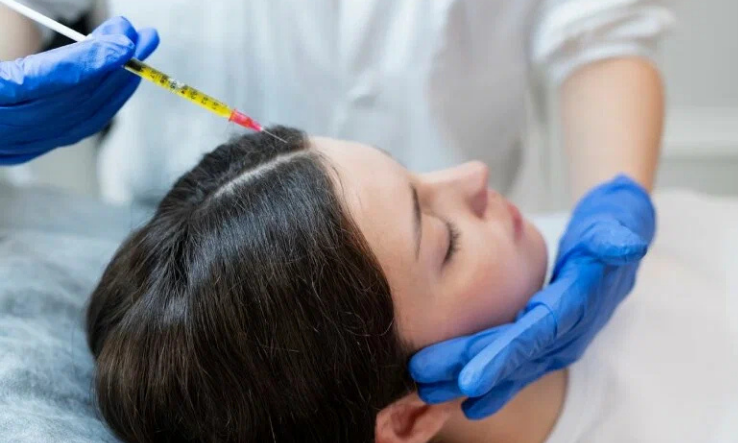
PRF Hair Treatment in Pallavaram
Understanding PRF Hair Treatment and Personalized Hair-Loss Assessment at Safa Elite Care
Hair thinning can be a gradual concern. You may first notice more hair on your pillow or comb, reduced volume while styling, widening areas of visible scalp, or a gradual change in your hairline.
PRF (Platelet-Rich Fibrin) hair treatment is an autologous treatment approach that uses a preparation obtained from the patient's own blood. PRF contains platelets within a fibrin-based structure and is being explored as a supportive option for selected hair-loss concerns.
Unlike a surgical hair-restoration procedure, PRF does not involve transplanting hair follicles from one part of the scalp to another. Instead, the prepared PRF is administered to selected areas of the scalp as part of a personalized treatment plan.
At Safa Elite Care, people looking for PRF hair treatment in Pallavaram can discuss their hair concerns and understand whether PRF may be appropriate for their individual situation.
The first step is not simply choosing a procedure. It is understanding the pattern and possible cause of your hair loss.
What Is PRF Hair Treatment?
PRF stands for Platelet-Rich Fibrin.
It is a blood-derived preparation created using a sample of the patient's own blood.
During its preparation, a fibrin matrix forms within the sample. This matrix can contain platelets and other naturally occurring blood components.
PRF has gained interest in regenerative treatment because of the biological components present within the fibrin structure.
For hair treatment, the prepared PRF is administered to selected areas of the scalp according to the individual's treatment plan.
How Does PRF Work for Hair?
PRF is based on the use of naturally occurring components from the patient's own blood.
The preparation contains platelets and growth-factor-related substances within a fibrin matrix. These components are associated with biological signalling and tissue-repair processes.
When PRF is administered to selected scalp areas, the fibrin structure can provide a framework that supports the gradual availability of these biological components.
In hair treatment, the objective is to support the local scalp environment around selected hair follicles.
However, PRF is not a guaranteed hair-regrowth treatment, and individual responses can vary.
What Makes PRF Different?
The fibrin matrix is one of the key characteristics that distinguishes PRF from conventional PRP.
PRF is designed to create a fibrin-based structure containing platelets and other blood-derived components.
This gives PRF different physical and biological characteristics from platelet-rich plasma.
For patients considering PRF, understanding this distinction is useful because PRF and PRP are related but different treatment approaches.
What Is Platelet-Rich Fibrin?
Platelet-Rich Fibrin is an autologous preparation created from the patient's own blood.
The preparation contains:
- Platelets
- Fibrin
- Naturally occurring blood-derived components
- Growth-factor-related substances
The fibrin network provides a structural framework within the preparation.
This characteristic has led to interest in PRF for applications involving tissue support and regenerative processes, including selected hair-loss concerns.
Why Is PRF Used for Hair Treatment?
Hair follicles require a suitable biological environment to maintain their normal growth cycle.
PRF is being explored because its biological components may support signalling processes associated with tissue repair and cellular activity.
For hair treatment, PRF is administered to selected scalp areas with the aim of supporting the local environment around the hair follicles.
The treatment is therefore intended as a supportive approach for selected hair-loss concerns, rather than a guaranteed method of restoring all lost hair.
What Hair Concerns Can PRF Be Considered For?
PRF may be discussed as an option for selected people experiencing hair thinning or reduced hair density.
Concerns that may lead someone to seek a PRF consultation include:
- Gradual hair thinning
- Increased hair shedding
- Reduced hair density
- Pattern-related hair loss
- Thinning in specific scalp areas
- Reduced hair volume
- Early-stage hair thinning
- Concerns about progressive hair loss
The presence of hair loss alone does not determine whether PRF is appropriate.
The underlying cause, pattern and stage of thinning should be considered.
What Causes Hair Loss?
Hair loss can have several possible causes.
Some common contributing factors include:
Genetic Factors
Inherited characteristics can contribute to pattern-related hair thinning.
Hormonal Factors
Hormonal changes can influence the hair-growth cycle.
Nutritional Factors
Certain nutritional deficiencies may be associated with increased shedding or changes in hair health.
Stress and Physical Changes
Significant physical or emotional stress can sometimes be followed by increased hair shedding.
Scalp Conditions
Certain scalp conditions may affect the environment surrounding hair follicles.
Medical Conditions and Medications
Some medical conditions and medications can influence hair growth or shedding.,/p>
Because the causes of hair loss can vary, understanding the underlying concern is an important part of treatment planning.
Why Identify the Cause of Hair Loss Before PRF?
Two people may experience hair thinning but have completely different underlying reasons.
For example, gradual pattern-related thinning requires a different evaluation from sudden unexplained shedding.
Before choosing PRF, it is useful to understand:
What is causing the hair loss?
What pattern does the thinning follow?
How long has it been occurring?
What is the current hair density?
Is PRF an appropriate option?
This approach helps avoid treating every type of hair loss in exactly the same way.
Who May Be Suitable for PRF Hair Treatment?
PRF may be considered for selected individuals with certain types of hair thinning.
During an assessment, factors such as the following may be considered:
- Type of hair loss
- Pattern of thinning
- Duration of the concern
- Existing hair density
- Scalp condition
- Previous treatments
- Possible contributing factors
- Individual treatment expectations
A consultation is important because PRF is not suitable for every person or every type of hair loss.
Is PRF Suitable for Everyone?
No.
Hair loss is not one single condition, and different causes may require different treatment approaches.
If hair shedding is sudden, unexplained or associated with other symptoms, identifying the possible cause may be more important before considering PRF.
Similarly, advanced hair loss may require discussion of other hair-restoration options.
The appropriate treatment should therefore be determined following individual assessment.
PRF for Early Hair Thinning
Early hair thinning can sometimes be subtle.
You may notice:
- Increased hair shedding
- Reduced volume
- A wider-looking scalp
- Gradual changes in hair density
- Thinning around specific areas
- Changes in the hairline
- Hair appearing less full than before
Seeking an assessment when these changes first become noticeable can help you understand what may be happening.
It can also provide an opportunity to discuss available treatment options before making a decision.
PRF for Pattern Hair Loss
Pattern hair loss can cause gradual changes in hair density.
It may affect men and women, although the distribution and appearance of thinning can differ.
PRF has been explored as a supportive approach for selected pattern-related hair-loss concerns.
Whether it is appropriate depends on factors such as:
- Pattern of thinning
- Extent of hair loss
- Existing hair density
- Duration of the condition
- Individual treatment goals
A personalized assessment remains important.
PRF Hair Treatment for Men
Men may experience progressive thinning around areas such as the:
- Hairline
- Temples
- Crown
- Top of the scalp
These changes may be associated with pattern-related hair loss.
PRF may be considered for selected cases following appropriate assessment.
The treatment decision should be based on the individual's condition rather than simply the presence of male pattern hair loss.
PRF Hair Treatment for Women
Women may experience hair thinning in different patterns.
Some may notice:
- Reduced overall density
- Widening of the visible scalp
- Increased shedding
- Thinning in specific areas
- Changes in hair volume
The possible causes can vary, making assessment particularly important.
PRF may be considered for selected female hair-loss concerns after evaluating the individual's condition.
Can PRF Support Hair Growth?
PRF is being explored as a supportive treatment for selected hair-loss conditions.
Its platelets, fibrin structure and growth-factor-related components are of interest because of their role in biological signalling and tissue-support processes.
For suitable patients, the treatment aims to support the scalp environment around selected hair follicles.
However, PRF does not guarantee hair regrowth, and results can vary from one person to another.
Can PRF Improve Hair Density?
Hair density is one of the important concerns for people experiencing hair thinning.
PRF-based treatment has been investigated for its potential to improve hair-related outcomes in selected patients.
However, the response may depend on:
- Underlying cause of hair loss
- Stage of thinning
- Existing follicular condition
- Individual biological response
- Treatment protocol
- Overall hair-loss management
A specific increase in hair density should therefore never be guaranteed.
Can PRF Make Hair Look Fuller?
Reduced density can make the scalp more visible and cause the hair to appear less full.
If an individual responds to treatment, changes in hair density or hair characteristics may contribute to an improved appearance of fullness.
However, the degree of improvement varies between individuals.
PRF should therefore be approached with realistic expectations.
Is PRF a Permanent Hair-Loss Solution?
No.
PRF should not be described as a permanent cure for every type of hair loss.
Some forms of hair loss can continue because their underlying causes remain active.
For example, pattern-related hair loss can be progressive and may require ongoing management.
PRF may form part of a broader hair-loss treatment strategy, depending on the individual's condition.
PRF as an Autologous Treatment
One of the defining features of PRF is that it is prepared from the patient's own blood.
This is known as an autologous treatment.
The process involves collecting a blood sample, preparing the PRF and administering it to selected scalp areas.
Because the preparation is derived from the patient's own blood, PRF is different from treatments involving externally manufactured growth-factor products.
PRF vs PRP: Are They the Same?
No.
PRF and PRP are both derived from the patient's own blood, but they are prepared differently.
PRF
Platelet-Rich Fibrin contains a fibrin matrix along with platelets and other blood-derived components.
PRP
Platelet-Rich Plasma is a plasma-based preparation containing a concentration of platelets.
The two treatments therefore have different characteristics and should not be treated as interchangeable terms.
A future section of this page will explain the differences between PRF and PRP in greater detail.
PRF vs GFC: Are They the Same?
No.
PRF and GFC are different blood-derived treatment approaches.
PRF
PRF stands for Platelet-Rich Fibrin and is characterized by a fibrin matrix containing platelets and other blood-derived components.
GFC
GFC stands for Growth Factor Concentrate and refers to a preparation designed to provide a growth-factor-rich concentrate from the patient's blood.
Both are being explored for selected hair-loss concerns, but their preparation methods and characteristics differ.
What Should You Know Before Choosing PRF?
Before deciding on PRF hair treatment, consider discussing:
- The possible cause of your hair loss
- Your current stage of thinning
- Your scalp condition
- Whether PRF is suitable for your concern
- How PRF differs from PRP
- How PRF differs from GFC
- The treatment process
- Expected treatment schedule
- Realistic treatment outcomes
- Other available options
A well-informed decision begins with understanding your individual hair concern.
PRF Hair Treatment in Pallavaram
If you are searching for PRF Hair Treatment in Pallavaram, understanding your hair-loss condition should be the first step.
At Safa Elite Care, individuals can discuss concerns such as hair thinning, reduced density and increased shedding and explore whether PRF may be appropriate.
The focus is on an individualized approach rather than presenting PRF as a universal solution for every hair-loss concern.
PRF Treatment in Cantonment Pallavaram
For people looking for PRF Treatment in Cantonment Pallavaram, a professional consultation can help you understand the treatment before making a decision.
Your consultation can help address questions such as:
What type of hair loss do I have?
Could PRF be suitable for my condition?
How does PRF differ from PRP or GFC?
What can I realistically expect from treatment?
Understanding these points can help you make a more informed decision about your hair treatment.
Key Takeaway
PRF hair treatment uses Platelet-Rich Fibrin prepared from the patient's own blood and administered to selected areas of the scalp. PRF has a fibrin-based structure that distinguishes it from PRP and differs from GFC in its preparation and characteristics. It may be considered for selected hair-loss concerns, but suitability and outcomes vary between individuals.
A professional hair and scalp assessment is the right starting point before choosing PRF treatment.
How Is PRF Hair Treatment Performed?
PRF hair treatment uses a small sample of the patient's own blood to prepare Platelet-Rich Fibrin (PRF). The prepared material is then administered to selected areas of the scalp as part of an individualized treatment plan.
The process can generally be understood as:
Consultation → Hair & Scalp Assessment → Blood Collection → PRF Preparation → Scalp Administration → Aftercare
The exact technique, preparation method and treatment protocol may vary according to the clinical approach and the patient's requirements.
Step 1: Hair and Scalp Assessment
Before beginning treatment, your hair and scalp should be assessed to understand the nature of your concern.
The consultation may consider:
- Pattern of hair thinning
- Areas with reduced hair density
- Duration of hair loss
- Hair-shedding pattern
- Existing hair density
- Scalp condition
- Previous hair-loss treatments
- Possible contributing factors
- Your treatment expectations
This helps determine whether PRF may be a suitable option for your particular hair-loss concern.
Step 2: Blood Collection
PRF is an autologous treatment, meaning the blood used to prepare the treatment comes from the same person receiving it.
A small blood sample is collected using an appropriate clinical procedure.
The sample is then processed to create the PRF preparation used during the scalp treatment.
Step 3: PRF Preparation
The collected blood undergoes a specific processing method to create Platelet-Rich Fibrin.
A fibrin matrix forms during the preparation process. This matrix can contain platelets and other naturally occurring blood-derived components.
The fibrin structure is an important characteristic of PRF and is one of the factors that distinguishes it from conventional PRP.
Once prepared, the PRF is ready for administration to the selected scalp areas.
Step 4: PRF Administration to the Scalp
The prepared PRF is administered to areas identified during the hair and scalp assessment.
The treatment areas may depend on:
- Location of thinning
- Pattern of hair loss
- Existing hair density
- Treatment objectives
- Individual assessment
This means the treatment approach can be adapted according to the patient's specific concern rather than using an identical protocol for everyone.
What Happens During a PRF Treatment Session?
A PRF hair-treatment session may involve several stages.
Consultation
Your hair concerns, expectations and relevant treatment history are discussed.
Hair and Scalp Assessment
The areas of thinning and the condition of the scalp are evaluated.
Blood Collection
A small sample of your own blood is collected.
PRF Preparation
The blood sample is processed to prepare the Platelet-Rich Fibrin.
Scalp Administration
The prepared PRF is administered to selected areas of the scalp.
Aftercare Guidance
You receive instructions about appropriate care following treatment.
The duration of a session can vary depending on the treatment approach and individual requirements.
What Are the Potential Benefits of PRF Hair Treatment?
PRF is being explored as a supportive treatment approach for selected hair-loss concerns.
Potential treatment goals may include:
- Supporting areas affected by hair thinning
- Supporting the appearance of hair density
- Supporting the scalp environment around selected follicles
- Improving the appearance of hair fullness
- Addressing selected pattern-related hair-loss concerns
- Providing an autologous treatment option
However, potential benefits are not guaranteed, and individual responses can differ.
How May PRF Support the Scalp Environment?
PRF contains platelets and other blood-derived components within a fibrin-based structure.
These components are associated with biological signalling and tissue-support processes.
When PRF is administered to selected scalp areas, the preparation is intended to support the local biological environment around the hair follicles.
The response depends on several individual factors, including the underlying cause and stage of hair loss.
Can PRF Support Hair Follicle Activity?
Hair follicles undergo different stages within the hair-growth cycle.
PRF has attracted interest because of the biological components associated with platelets and fibrin.
The growth-factor-related substances present in PRF are being studied for their potential role in processes involving cellular activity and tissue repair.
For hair treatment, PRF is used with the aim of supporting the environment around selected hair follicles.
This does not mean that every treated follicle will respond or that previously lost hair will necessarily return.
Can PRF Improve Hair Density?
Reduced hair density is one of the main concerns for people seeking hair-loss treatment.
PRF has been investigated for its potential to support improvements in hair-related outcomes in selected patients.
The response may depend on:
- Cause of hair loss
- Stage of thinning
- Existing hair density
- Condition of the hair follicles
- Individual biological response
- Treatment protocol
- Overall hair-loss management
Therefore, a particular increase in hair density cannot be promised.
Can PRF Make Hair Look Fuller?
Hair can appear thinner when the number or density of visible hairs decreases.
If a patient responds to treatment, changes in hair density or other hair characteristics may contribute to an improved appearance of fullness.
However, the degree of visible improvement varies between individuals.
The purpose of treatment should therefore be discussed in terms of realistic and individualized expectations.
How Many PRF Sessions Are Needed?
There is no single session schedule that applies to everyone.
The number and spacing of sessions may depend on:
- Type of hair loss
- Degree of thinning
- Existing hair density
- Treatment objectives
- Previous treatments
- Individual response
- Clinical assessment
Different treatment protocols may also use different intervals.
Your recommended treatment plan should therefore be based on your individual assessment rather than a fixed number advertised for everyone.
When Can You Expect Results From PRF?
PRF does not produce instant hair growth.
Hair follicles follow a biological growth cycle, so any changes in hair appearance or density may develop gradually.
The timeframe can differ according to:
- Underlying cause of hair loss
- Stage of thinning
- Existing follicular condition
- Individual response
- Treatment schedule
- Overall hair-loss management
For this reason, progress should be assessed over time rather than immediately after a treatment session.
Does PRF Provide Permanent Hair Regrowth?
PRF should not be described as a permanent cure for hair loss.
Some forms of hair loss can continue because their underlying causes remain active.
For example, pattern-related hair loss can be progressive and may require ongoing management.
PRF may be included as one part of a broader hair-loss treatment strategy when considered appropriate.
PRF for Pattern Hair Loss
Pattern hair loss can gradually reduce hair density and change the appearance of the scalp.
PRF has been explored as a supportive treatment approach for selected individuals with pattern-related hair thinning.
Its suitability may depend on:
- Extent of thinning
- Duration of hair loss
- Existing hair density
- Hair-loss pattern
- Individual treatment goals
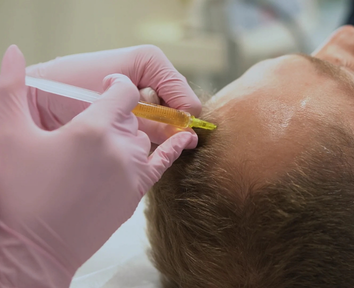
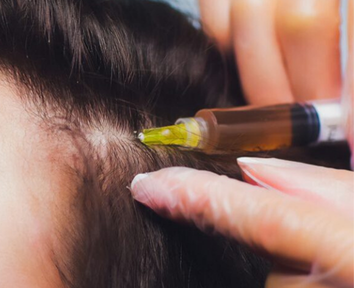
PRF should therefore be considered following an appropriate assessment.
PRF Hair Treatment for Men
Men may experience progressive thinning around areas such as:
- Hairline
- Temples
- Crown
- Top of the scalp
PRF may be considered for selected cases of pattern-related hair thinning.
However, treatment suitability should be determined by evaluating the individual's specific hair-loss pattern and existing hair density.
PRF Hair Treatment for Women
Women may experience hair thinning in different patterns and for different reasons.
Possible concerns include:
- Reduced overall density
- Increased shedding
- Wider visible scalp
- Reduced hair volume
- Thinning in specific areas
PRF may be considered for selected female hair-loss concerns after appropriate assessment.
Identifying possible contributing factors is particularly important before selecting treatment.
PRF vs PRP for Hair Treatment
PRF and PRP are both prepared from the patient's own blood, but they are not identical treatments.
| Feature | PRF | PRP |
|---|---|---|
| Full form | Platelet-Rich Fibrin | Platelet-Rich Plasma |
| Source | Patient's own blood | Patient's own blood |
| Main characteristic | Fibrin matrix containing platelets and other blood-derived components | Platelet-rich plasma preparation |
| Preparation | Different processing approach | Different processing approach |
| Hair application | Selected hair-loss concerns | Selected hair-loss concerns |
| Treatment schedule | Depends on individual plan | Depends on individual plan |
Is PRF Better Than PRP?
There is no universal answer.
PRF and PRP have different characteristics, and the appropriate choice depends on the individual's hair-loss condition, treatment goals and professional assessment.
PRF vs GFC for Hair Treatment
PRF and GFC are also different treatment approaches.
PRF
Platelet-Rich Fibrin contains a fibrin matrix along with platelets and other blood-derived components.
GFC
Growth Factor Concentrate refers to a preparation designed to provide a growth-factor-rich concentrate obtained from the patient's blood.
Both approaches may be considered for selected hair-loss concerns, but they are not interchangeable.
Which Is Better: PRF or GFC?
There is no treatment that is automatically better for every individual.
The appropriate option should be considered according to:
Cause → Pattern → Stage → Hair density → Treatment goals → Professional assessment
Can PRF Be Combined With Other Hair Treatments?
In certain situations, PRF may form part of a broader hair-loss management plan.
However, combining several treatments should be based on individual assessment.
It is not advisable to assume that using multiple treatments will automatically produce better results.
Your treating professional can determine whether another treatment may be appropriate alongside PRF.
Is PRF a Surgical Hair Treatment?
No.
PRF is a non-surgical, autologous treatment approach.
It does not involve removing and transplanting hair follicles from a donor area.
Instead, a preparation made from the patient's own blood is administered to selected scalp areas.
This makes PRF fundamentally different from surgical hair-restoration procedures such as hair transplantation.
PRF vs Hair Transplant
PRF and hair transplantation have different purposes and treatment methods.
PRF Hair Treatment
Uses a blood-derived fibrin preparation administered to selected scalp areas.
Hair Transplant
Involves surgically relocating hair follicles from a donor area to areas requiring restoration.
PRF may be considered for selected cases of hair thinning, while people with more advanced hair loss may need to discuss other restoration options.
What Should You Tell Your Doctor Before PRF?
Before treatment, discuss relevant information such as:
- Current medications
- Supplements
- Previous hair treatments
- Scalp conditions
- Relevant medical history
- Previous injectable procedures
- Concerns about blood collection
- Any other information your treating professional asks about
Complete information can help your clinician make a more appropriate treatment decision.
PRF Hair Treatment Aftercare
After treatment, follow the specific instructions provided by your treating professional.
Your aftercare guidance may include recommendations regarding:
Scalp Care
Follow the recommended instructions for caring for the treated areas.
Hair Washing
Ask when you can resume your usual hair-washing routine.
Hair Products
Follow professional guidance about the use of styling and hair-care products after treatment.
Physical Activity
Your clinician can advise you about when strenuous activities can be resumed.
Touching the Scalp
Avoid unnecessary rubbing, scratching or pressure on treated areas according to your aftercare instructions.
Follow-Up
Attend recommended follow-up appointments so your progress can be evaluated.
Is There Downtime After PRF?
PRF is a non-surgical treatment and does not involve the recovery period associated with hair-transplant surgery.
However, temporary scalp effects may occur after treatment.
Your treating professional can explain what you may experience and provide individualized aftercare instructions.
Can You Return to Normal Activities After PRF?
Many people may be able to continue their normal routine after a non-surgical scalp treatment.
However, individual recommendations can vary.
Your clinician will advise you if certain activities need to be avoided or modified temporarily after your session.
How Should You Prepare for PRF Treatment?
Preparation requirements may vary depending on the treatment protocol.
Before your appointment, discuss relevant information including:
- Current medications
- Supplements
- Previous treatments
- Scalp concerns
- Relevant medical history
- Previous injectable treatments
Follow the specific preparation instructions provided by your treating professional.
What Are Realistic Expectations From PRF?
A responsible hair-treatment plan should focus on realistic expectations.
PRF should not be presented as:
- A guaranteed cure for hair loss
- A permanent solution for every patient
- An instant hair-growth procedure
- A treatment that produces identical results for everyone
- A replacement for identifying the underlying cause of hair loss
Instead, PRF may be considered a supportive treatment option for selected patients, with outcomes varying according to individual circumstances.
When Should You Consider a PRF Consultation?
You may consider professional assessment if you notice:
- Persistent hair shedding
- Gradual thinning
- Reduced hair volume
- Increasing scalp visibility
- Thinning around the hairline
- Crown thinning
- Reduced density in specific areas
- Progressive changes in your hair
A consultation can help determine what may be contributing to the change and whether PRF is an appropriate option.
Choosing PRF Hair Treatment in Pallavaram
If you are searching for PRF Hair Treatment in Pallavaram, consider the quality of the consultation and treatment planning rather than choosing a procedure based only on online claims.
Look for an approach that includes:
- Individual hair assessment
- Scalp evaluation
- Clear explanation of PRF
- Personalized treatment planning
- Realistic expectations
- Appropriate aftercare
- Follow-up guidance
- Discussion of alternatives when relevant
For individuals searching for PRF Treatment in Cantonment Pallavaram, understanding whether the treatment is suitable for your specific hair concern should come before proceeding.
Key Takeaway
PRF hair treatment involves collecting a small sample of the patient's own blood, preparing Platelet-Rich Fibrin and administering the prepared material to selected scalp areas. PRF differs from PRP and GFC in its preparation and characteristics. It may be considered for selected hair-thinning concerns, but treatment schedules and outcomes vary according to the individual.
Meet Dr. Safa Thabassum
Dr. Safa Thabassum, BDS, MPH (UK), with over 8+ years of experience, is associated with Safa Elite Care and follows a personalized, patient-focused approach to treatment.
When considering PRF hair treatment, understanding the individual's hair-loss pattern and treatment goals is an important part of the consultation. Hair thinning can have different causes, and the same treatment may not be appropriate for everyone.
During your consultation, you can discuss your hair concerns, previous treatments and expectations and understand whether PRF may be a suitable option for you.
Why Choose Safa Elite Care for PRF Hair Treatment?
Selecting a hair treatment should involve more than choosing a procedure. Understanding your individual concern and having realistic expectations are equally important.
At Safa Elite Care, the PRF treatment approach focuses on:
Personalized Consultation
Your hair concerns, expectations and relevant treatment history can be discussed before treatment planning.
Individual Hair Assessment
Hair thinning can present in different patterns. Understanding your individual condition helps guide the treatment discussion.
Clear Treatment Explanation
The PRF process, preparation, administration and aftercare can be explained before you proceed.
Realistic Expectations
Hair treatments do not produce identical outcomes for everyone. Understanding the possible benefits and limitations helps patients make informed decisions.
Patient-Centred Care
The focus is on understanding your requirements and discussing suitable treatment options rather than presenting PRF as a universal solution.
PRF Hair Treatment in Pallavaram
If you are looking for PRF Hair Treatment in Pallavaram, the first step is understanding the reason and pattern behind your hair loss.
Hair thinning can occur for different reasons. PRF may be appropriate for some patients, while another treatment approach may be more suitable for others.
At Safa Elite Care, patients can discuss concerns such as:
- Hair thinning
- Increased hair shedding
- Reduced hair density
- Pattern-related hair loss
- Changes in hair volume
- Progressive thinning
A consultation can help determine whether PRF is an appropriate treatment option for your individual concern.
PRF Treatment in Cantonment Pallavaram
For people searching for PRF Treatment in Cantonment Pallavaram, choosing a treatment should begin with an individual assessment.
During the consultation, important questions can be addressed, including:
What type of hair loss am I experiencing?
What may be contributing to my hair thinning?
Could PRF be suitable for my condition?
How does PRF differ from PRP or GFC?
What can I realistically expect from treatment?
Having these questions answered can help you make a more informed decision.
Who May Consider PRF Hair Treatment?
A PRF consultation may be appropriate for individuals experiencing concerns such as:
- Gradual hair thinning
- Reduced hair density
- Increased hair shedding
- Pattern-related hair loss
- Early changes in hair density
- Reduced hair volume
- Thinning in particular scalp areas
Suitability depends on the individual's condition.
PRF should not automatically be recommended simply because someone is experiencing hair loss.
Who May Need Further Assessment Before PRF?
If hair loss is sudden, unexplained or significantly different from your usual pattern, identifying the possible cause may be an important first step.
Further assessment may also be appropriate when:
- Hair shedding is unusually rapid
- The pattern of hair loss is unclear
- There are noticeable scalp concerns
- Hair loss has progressed significantly
- Previous treatments have not addressed the concern
- The cause of thinning has not been established
The purpose of assessment is to understand the problem before deciding on treatment.
What Happens During Your PRF Consultation?
Your consultation may involve discussion of:
Your Hair History
When the hair loss started and how it has changed over time.
Your Hair-Loss Pattern
Where thinning or reduced density is most noticeable.
Your Scalp
The general condition of the scalp and any relevant concerns.
Previous Treatments
Any previous hair-loss procedures or treatments you have undergone.
Your Expectations
What you hope to achieve through treatment.
Treatment Options
Whether PRF or another approach may be more appropriate for your condition.
What Should You Expect From PRF Treatment?
PRF should be approached with realistic expectations.
It is not an instant hair-growth procedure.
If treatment is appropriate and an individual responds, changes may develop gradually rather than immediately.
Treatment outcomes can vary because every person's:
- Hair-loss pattern
- Follicular condition
- Stage of thinning
- Biological response
- Treatment history
is different.
Can PRF Restore All Lost Hair?
No.
PRF should not be presented as a method that can restore all lost hair.
The potential response depends on the condition of the existing hair follicles and the underlying cause of hair loss.
People with different stages and types of hair loss may experience different outcomes.
A professional assessment can help establish more realistic expectations.
Is PRF a Permanent Solution for Hair Loss?
No.
PRF is not a guaranteed permanent solution for every form of hair loss.
Some causes of hair loss can remain active over time, which means ongoing management may be required.
PRF may be considered as one part of an overall hair-loss management approach where appropriate.
Can PRF Be Used Alongside Other Treatments?
Depending on the individual's condition, PRF may be considered alongside other hair-loss management options.
However, combining treatments should be based on professional assessment.
Using multiple treatments does not automatically mean better results.
Your treatment plan should be designed around your particular hair-loss concern and goals.
PRF Hair Treatment and Realistic Expectations
Online hair-treatment advertising can sometimes create unrealistic expectations.
A responsible approach should recognize that:
- Results vary between individuals.
- Hair growth is gradual.
- PRF is not a guaranteed cure.
- The underlying cause of hair loss matters.
- Treatment suitability differs between patients.
- Ongoing management may be necessary for progressive hair-loss conditions.
Understanding these factors before treatment can help you make a more informed decision.
Quick Answers About PRF Hair Treatment
What is PRF hair treatment?
PRF hair treatment uses Platelet-Rich Fibrin prepared from the patient's own blood and administered to selected areas of the scalp.
What does PRF stand for?
PRF stands for Platelet-Rich Fibrin.
Is PRF the same as PRP?
No. Both are derived from the patient's own blood, but they use different preparation approaches and have different characteristics.
Is PRF the same as GFC?
No. PRF and GFC are different blood-derived treatment approaches with different preparation methods.
Can PRF help hair growth?
PRF may support hair-related outcomes in selected patients, but individual responses vary and results cannot be guaranteed.
Can PRF improve hair density?
PRF has been investigated for its potential to support hair-density outcomes in selected hair-loss conditions. Individual results can differ.
Is PRF a surgical procedure?
No. PRF is a non-surgical, autologous treatment approach.
Does PRF use my own blood?
Yes. The PRF preparation is created from a sample of the patient's own blood.
Is PRF suitable for men?
It may be considered for selected male hair-loss concerns following appropriate assessment.
Is PRF suitable for women?
It may also be considered for selected female hair-loss concerns after individual assessment.
How many PRF sessions are required?
There is no universal number of sessions. The treatment schedule depends on the individual's condition and treatment plan.
How soon will PRF results appear?
Any changes are expected to develop gradually. The timeline varies between individuals.
Does PRF permanently stop hair loss?
No. PRF should not be presented as a permanent cure for all forms of hair loss.
Is PRF better than PRP?
There is no universal answer. The appropriate option depends on the individual's condition, treatment goals and professional assessment.
Is PRF better than GFC?
Neither treatment is automatically better for everyone. PRF and GFC are different approaches and should be considered according to individual requirements.
Why a Professional PRF Consultation Matters
Searching online for PRF hair treatment near me can help you discover treatment options, but an online search cannot determine which treatment is appropriate for your particular type of hair loss.
A professional consultation can help you understand:
Your hair-loss pattern → Possible contributing factors → Treatment suitability → Available options → Realistic expectations
This can help you make a treatment decision based on your individual needs.
Book a PRF Hair Treatment Consultation in Pallavaram
If you are experiencing hair thinning, increased shedding or reduced hair density and are considering PRF Hair Treatment in Pallavaram, Safa Elite Care can help you understand your treatment options.
You can discuss your concerns with Dr. Safa Thabassum, BDS, MPH (UK), with over 8+ years of experience, and understand whether PRF may be appropriate for your individual situation.
Contact Safa Elite Care
Phone: 095666 77046
Email: safaelitecare\@outlook.com
Address: No.12, G-2, Ponniamman Koil Street, Cantonment Pallavaram, Chennai, India – 600043
Take the First Step Towards Understanding Your Hair Loss
Hair thinning can have different causes, and choosing the right treatment starts with understanding the individual concern.
If you are considering PRF Hair Treatment in Pallavaram, contact Safa Elite Care to discuss your concerns, understand the treatment process and find out whether PRF may be suitable for you.
Call 095666 77046 to enquire about a PRF hair treatment consultation.
faqs
Quick Answers About PRF Hair Treatment
PRF hair treatment uses Platelet-Rich Fibrin prepared from the patient's own blood and administered to selected areas of the scalp.
PRF stands for Platelet-Rich Fibrin.
No. Both are derived from the patient's own blood, but they use different preparation approaches and have different characteristics.
PRF may support hair-related outcomes in selected patients, but individual responses vary and results cannot be guaranteed.
There is no universal number of sessions. The treatment schedule depends on the individual's condition and treatment plan.

