PRP Hair Treatment in Pallavaram
Understanding PRP Hair Treatment and Personalized Hair-Loss Care at Safa Elite Care
Hair thinning can affect both the appearance of your hair and your confidence. Some people notice increased hair shedding, while others gradually observe reduced density around the hairline, crown or other areas of the scalp.
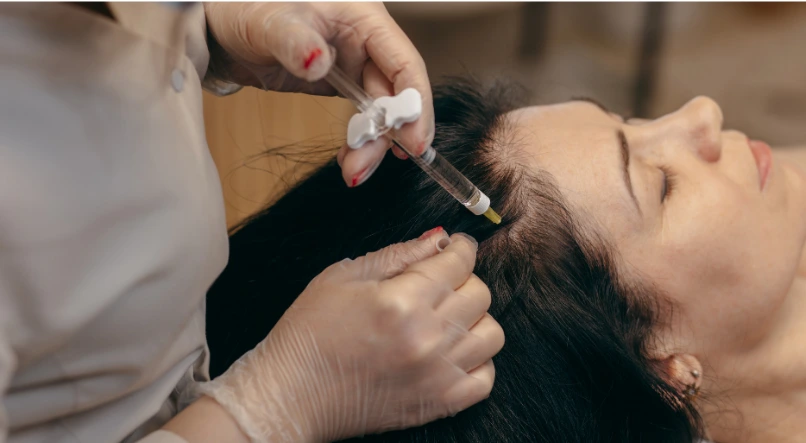
PRP (Platelet-Rich Plasma) hair treatment is a non-surgical, autologous treatment that uses a preparation obtained from the patient's own blood. The platelet-rich portion is prepared and administered to selected areas of the scalp as part of a personalized hair-loss treatment plan.
PRP has been studied as a supportive treatment for certain types of hair loss, particularly selected cases of pattern-related hair thinning.
At Safa Elite Care, individuals looking for PRP hair treatment in Pallavaram can discuss their concerns and understand whether PRP may be suitable for their particular hair-loss pattern.
The aim is not simply to offer a procedure. It is to first understand the hair concern and then determine whether PRP is an appropriate treatment option.
What Is PRP Hair Treatment?
PRP stands for Platelet-Rich Plasma.
PRP is prepared from a sample of the patient's own blood.
The blood sample is processed to separate and concentrate the platelet-rich plasma component. This preparation contains platelets along with plasma and naturally occurring biological components.
The prepared PRP can then be administered to selected areas of the scalp according to the individual's treatment plan.
Because the material is obtained from the patient's own blood, PRP is considered an autologous treatment.
How Does PRP Work for Hair Loss?
Platelets contain various biological substances involved in processes such as tissue repair and cellular signalling.
PRP treatment uses a concentrated platelet-containing preparation with the aim of supporting the biological environment around selected hair follicles.
When PRP is administered to areas of hair thinning, the treatment is intended to provide these naturally occurring components directly to the targeted scalp areas.
The response can vary considerably between individuals.
Therefore, PRP should be viewed as a potential supportive treatment for selected hair-loss conditions, rather than a guaranteed method of restoring every lost hair.
How Is PRP Prepared?
PRP begins with the collection of a small amount of the patient's blood.
The sample is processed using an appropriate preparation technique to separate the platelet-rich plasma from other blood components.
The resulting PRP preparation can then be used for administration to the selected scalp areas.
The exact preparation process and platelet concentration can vary depending on the clinical protocol and equipment used.
What Is Platelet-Rich Plasma?
Platelet-Rich Plasma is a blood-derived preparation containing a higher concentration of platelets than normally found in circulating blood.
Platelets are naturally involved in biological processes related to tissue repair and signalling.
In hair treatment, PRP is used with the intention of supporting the scalp environment around hair follicles affected by selected types of hair thinning.
PRP is not a synthetic hair-growth product. It is prepared from the patient's own blood.
Why Is PRP Used for Hair Treatment?
Hair follicles depend on a suitable biological environment to maintain their growth cycle.
PRP has attracted interest in hair treatment because platelets contain various growth-factor-related substances and signalling molecules.
When PRP is administered to selected scalp areas, these biological components are intended to support processes associated with the local tissue environment.
However, the response depends on the individual's hair-loss condition and other factors.
PRP should therefore be considered as one possible component of a broader hair-loss management plan.
What Types of Hair Loss May Be Considered for PRP?
PRP may be discussed as a treatment option for selected individuals experiencing hair thinning or reduced hair density.
Concerns that may lead someone to seek a PRP consultation include:
- Gradual hair thinning
- Pattern-related hair loss
- Reduced hair density
- Increased hair shedding
- Thinning around the hairline
- Crown-area thinning
- Reduced hair volume
- Early-stage hair thinning
The suitability of PRP depends on the cause and characteristics of the hair loss. Not every form of hair loss should be treated with PRP.
What Causes Hair Thinning?
Hair loss can develop because of different factors. Understanding the possible cause is important before selecting treatment.
Genetic and Pattern-Related Factors
Inherited characteristics can contribute to progressive hair thinning.
Hormonal Changes
Changes in hormonal balance may affect the hair-growth cycle.
Nutritional Factors
Certain nutritional deficiencies may contribute to increased shedding or changes in hair health.
Stress and Physical Changes
Significant stress or physical changes can sometimes be followed by increased hair shedding.
Scalp Conditions
Some scalp conditions may affect the environment around hair follicles.
Medical Conditions and Medications
Certain medical conditions and medications may contribute to hair loss or increased shedding.
Because the cause can differ from one person to another, a proper assessment is important before choosing PRP.
Why Should the Cause of Hair Loss Be Identified First?
Hair loss is a symptom rather than a single condition. For example, gradual pattern-related thinning is different from sudden shedding caused by another underlying factor.
Before considering PRP, it can be useful to understand:
- What type of hair loss is present
- How long the hair loss has been occurring
- Where the thinning is located
- Whether the condition is progressing
- What the scalp condition is like
- Whether other contributing factors may be involved
This helps ensure that treatment decisions are based on the individual's actual concern.
Who May Be Suitable for PRP Hair Treatment?
PRP may be considered for selected people experiencing certain forms of hair thinning.
During a consultation, factors that may be considered include:
- Type of hair loss
- Hair-loss pattern
- Duration of thinning
- Existing hair density
- Scalp condition
- Previous hair treatments
- Possible contributing factors
- Treatment expectations
PRP is not automatically suitable for everyone experiencing hair loss.
Is PRP Suitable for Everyone?
No.
Different types of hair loss can require different treatment strategies.
If hair shedding is sudden, unexplained or unusually severe, identifying the possible cause may be more important before proceeding with a regenerative treatment.
Similarly, advanced hair loss may require discussion of other hair-restoration options. A professional assessment can help determine whether PRP is appropriate.
PRP for Early Hair Thinning
Early hair thinning may not always be obvious.
You might notice:
- More hair falling while washing
- Reduced hair volume
- Increased scalp visibility
- A change in your hairline
- Thinning around the crown
- Hair appearing less dense
- A gradual reduction in overall fullness
If these changes persist, an assessment can help identify the possible cause and available treatment options. Early consultation can also help establish realistic expectations before selecting a treatment.
PRP for Pattern Hair Loss
Pattern hair loss is one of the common reasons people seek treatment for progressive hair thinning. It can gradually affect hair density and alter the appearance of the scalp.
PRP has been studied as a supportive treatment approach for selected cases of pattern-related hair loss.
The potential suitability of PRP depends on factors including the stage of thinning, existing hair density and the individual's overall hair-loss pattern.
PRP Hair Treatment for Men
Men may experience progressive thinning in areas such as:
- Hairline
- Temples
- Crown
- Top of the scalp
These changes may be associated with pattern-related hair loss. PRP may be considered for selected cases after an appropriate assessment.
The treatment plan should be based on the individual's hair-loss pattern rather than simply the fact that the patient is experiencing male pattern thinning.
PRP Hair Treatment for Women
Women can experience hair thinning for a range of reasons.
Some may notice:
- Reduced overall hair density
- Increased shedding
- Widening of the visible scalp
- Reduced hair volume
- Thinning in specific scalp areas
The cause of female hair thinning can vary, so identifying possible contributing factors is important.
PRP may be considered for selected female hair-loss concerns following individual assessment.
Can PRP Help With Hair Growth?
PRP has been investigated as a supportive treatment for selected hair-loss conditions.
The platelets in PRP contain biological components involved in signalling and tissue-support processes.
When administered to selected scalp areas, PRP is intended to support the local environment around hair follicles.
However, PRP does not guarantee hair regrowth, and individual responses can vary.
Can PRP Improve Hair Density?
Hair density is an important consideration for people experiencing thinning.
PRP has been studied for its potential to improve certain hair-related outcomes in selected patients.
The response may depend on:
- Underlying cause of hair loss
- Stage of thinning
- Existing hair density
- Hair-follicle condition
- Individual biological response
- Treatment protocol
- Overall hair-loss management
For this reason, a specific increase in hair density should not be guaranteed.
Can PRP Make Hair Look Fuller?
When hair density decreases, the scalp can become more visible and the hair may appear less full.
If a patient responds to PRP treatment, changes in hair density or hair characteristics may contribute to an improved appearance of fullness.
However, outcomes differ between individuals.
PRP should therefore be approached with realistic expectations rather than a promise of a particular cosmetic result.
Is PRP a Permanent Solution for Hair Loss?
No.
PRP should not be described as a permanent cure for every type of hair loss.
Some forms of hair loss can continue because their underlying causes remain active.
For progressive pattern-related hair loss, long-term management may still be necessary.
PRP may be considered as one component of an overall hair-loss treatment strategy where appropriate.
Is PRP a Surgical Hair Treatment?
No.
PRP is a non-surgical treatment approach.
It does not involve removing hair follicles from one part of the scalp and transplanting them to another area.
Instead, PRP is prepared from the patient's own blood and administered to selected areas of the scalp.
This makes PRP fundamentally different from surgical hair-restoration procedures such as hair transplantation.
PRP Hair Treatment in Pallavaram
If you are searching for PRP Hair Treatment in Pallavaram, understanding your hair-loss concern should come before selecting a procedure.
At Safa Elite Care, patients can discuss concerns such as hair thinning, increased shedding and reduced density and explore whether PRP may be appropriate for their individual situation.
The treatment approach should be based on the person's hair-loss pattern, existing density and treatment goals.
PRP Treatment in Cantonment Pallavaram
For people looking for PRP Treatment in Cantonment Pallavaram, an individual consultation can help answer important questions before treatment.
You can discuss:
- Your current hair-loss pattern
- Possible causes of thinning
- Whether PRP may be appropriate
- What the treatment involves
- How PRP differs from PRF and GFC
- What results may realistically be expected
The aim is to help you make an informed decision rather than choosing treatment based only on promotional claims.
What Should You Know Before Choosing PRP?
Before undergoing PRP hair treatment, it is useful to understand:
- Your hair-loss pattern
- Possible contributing factors
- Whether PRP is suitable
- What the treatment involves
- How PRP differs from other blood-derived treatments
- What outcomes can realistically be expected
- Whether other treatment options should be considered
A personalized assessment is therefore an important starting point.
Key Takeaway
PRP hair treatment uses Platelet-Rich Plasma prepared from the patient's own blood and administered to selected areas of the scalp. It may be considered as a supportive treatment for certain hair-loss concerns, but suitability and results vary between individuals. Understanding the cause and pattern of hair loss is an important step before choosing PRP.
For people considering PRP Hair Treatment in Pallavaram, a professional consultation can help determine whether PRP is an appropriate option for their individual hair-loss concern.
How Does PRP Hair Treatment Work?
PRP hair treatment begins with a small sample of your own blood. The sample is processed to separate the platelet-rich plasma, which is then administered to selected areas of the scalp.
The overall process can be broadly understood as:
Consultation → Hair & Scalp Assessment → Blood Collection → PRP Preparation → Scalp Administration → Aftercare → Follow-Up
The exact treatment protocol may vary depending on the individual's hair-loss pattern, scalp condition and clinical assessment.
Step 1: Hair and Scalp Assessment
Before PRP treatment, your hair and scalp should be evaluated to understand the nature of your concern.
The assessment may consider:
- Pattern of hair thinning
- Areas with reduced density
- Duration of hair loss
- Hair-shedding pattern
- Existing hair density
- Scalp condition
- Previous hair-loss treatments
- Possible contributing factors
- Treatment expectations
This assessment helps determine whether PRP is an appropriate option for you.
Step 2: Blood Collection
PRP is an autologous treatment, which means the blood used for the preparation comes from the person receiving the treatment.
A small quantity of blood is collected using an appropriate clinical procedure.
The sample is then processed to separate the platelet-rich plasma component.
Step 3: PRP Preparation
The collected blood is processed using a specific preparation technique.
The objective is to separate the plasma component containing a concentrated number of platelets from other blood components.
The resulting Platelet-Rich Plasma is then prepared for administration to the selected scalp areas.
The exact preparation technique, equipment and platelet concentration can differ according to the clinical protocol.
Step 4: PRP Administration to the Scalp
Once the PRP preparation is ready, it is administered to the areas identified during the assessment.
The treated areas may include regions where there is:
- Reduced hair density
- Pattern-related thinning
- Hairline thinning
- Crown thinning
- Localized reduction in hair volume
The treatment areas and approach are determined according to the individual's condition and treatment objectives.
What Happens During a PRP Hair Treatment Session?
A typical session may involve several stages.
1. Consultation
Your hair concerns, treatment history and expectations are discussed.
2. Scalp Assessment
The areas of thinning and the general scalp condition are evaluated.
3. Blood Collection
A small sample of your own blood is collected.
4. PRP Preparation
The blood sample is processed to obtain the platelet-rich plasma.
5. Scalp Treatment
The prepared PRP is administered to selected scalp areas.
6. Aftercare Guidance
You receive instructions regarding appropriate care following the treatment.
The overall duration of the session can vary depending on the treatment protocol and individual requirements.
What Are the Potential Benefits of PRP Hair Treatment?
PRP is being studied and used as a supportive treatment approach for selected hair-loss concerns.
Potential treatment goals may include:
- Supporting areas affected by hair thinning
- Supporting the local scalp environment
- Supporting the appearance of hair density
- Improving the appearance of hair fullness
- Addressing selected pattern-related hair-loss concerns
- Providing a non-surgical treatment option
- Using an autologous blood-derived preparation
However, potential benefits are not guaranteed, and the response can differ from person to person.
How May PRP Support the Scalp?
Platelets contain various biological substances involved in processes associated with tissue repair and cellular signalling.
PRP concentrates platelets within a plasma-based preparation.
When administered to selected scalp areas, PRP is intended to support the local biological environment around the hair follicles.
The treatment response depends on individual factors such as the underlying cause, stage and pattern of hair loss.
Can PRP Support Hair Follicle Activity?
Hair follicles naturally move through different stages of the hair-growth cycle.
PRP has attracted interest in hair treatment because of the biological substances associated with platelets.
The treatment is intended to support the environment surrounding selected hair follicles.
However, PRP does not mean that every hair follicle will respond in the same way.
The outcome can depend on the condition of the follicles and the underlying cause of hair loss.
Can PRP Improve Hair Density?
Reduced hair density is a common reason people seek hair-loss treatment.
PRP has been investigated for its potential to improve certain hair-related outcomes in selected patients.
The response can depend on:
- Cause of hair loss
- Stage of thinning
- Existing hair density
- Condition of the hair follicles
- Individual biological response
- Treatment protocol
- Overall hair-loss management
Therefore, a specific improvement in hair density cannot be guaranteed.
Can PRP Make Hair Look Fuller?
When hair density decreases, more of the scalp may become visible and the hair can appear less full.
If an individual responds to PRP treatment, changes in hair density may contribute to an improved appearance of fullness.
However, the degree of visible improvement varies between individuals.
PRP should therefore be approached with realistic expectations rather than a promise of a particular cosmetic result.
How Many PRP Sessions Are Required?
There is no single PRP schedule that is appropriate for everyone.
The number and spacing of sessions may depend on:
- Type of hair loss
- Severity of thinning
- Existing hair density
- Treatment objectives
- Previous treatments
- Individual response
- Clinical assessment
Different clinical protocols may recommend different treatment intervals.
Your treatment plan should therefore be individualized rather than based on a fixed number of sessions advertised for everyone.
When Can You See Results From PRP?
PRP does not produce immediate hair growth.
Hair follicles follow a natural growth cycle, so any changes in hair density or appearance generally need time to become noticeable.
The timeline can vary depending on:
- Underlying cause of hair loss
- Stage of thinning
- Existing follicular condition
- Individual biological response
- Treatment schedule
- Other aspects of hair-loss management
Regular assessment can help track changes over time.
Does PRP Provide Permanent Hair Regrowth?
No.
PRP should not be described as a permanent cure for all forms of hair loss.
Some types of hair loss can continue because the underlying factors responsible for the condition remain active.
For progressive pattern-related hair loss, ongoing management may be required.
PRP may be considered as one component of a broader hair-loss treatment strategy when appropriate.
PRP Aftercare
After your PRP session, follow the specific instructions provided by your treating professional.
Depending on your individual treatment protocol, you may receive guidance regarding:
Scalp Care
Follow the recommended instructions for caring for the treated scalp.
Hair Washing
Your clinician can advise when you should resume your normal hair-washing routine.
Hair Products
Follow professional recommendations regarding styling products and other scalp or hair products.
Physical Activity
You may receive guidance about temporarily modifying strenuous physical activity.
Scalp Contact
Avoid unnecessary rubbing, scratching or pressure on treated areas according to your aftercare instructions.
Follow-Up
Attend recommended follow-up appointments to assess your progress.
Is There Downtime After PRP?
PRP is a non-surgical treatment, so it does not involve the recovery period associated with hair-transplant surgery.
Some temporary scalp effects may occur following treatment.
Your clinician can explain what you may experience and provide appropriate aftercare instructions.
Can You Return to Your Normal Routine After PRP?
Many people can continue their normal activities following a non-surgical scalp treatment.
However, individual recommendations may vary.
Your treating professional will advise you if particular activities need to be avoided or modified temporarily after your session.
How Should You Prepare for PRP Treatment?
Preparation requirements may vary depending on the clinical protocol.
Before treatment, discuss relevant information such as:
- Current medications
- Supplements
- Previous hair treatments
- Previous injectable treatments
- Scalp conditions
- Relevant medical history
- Any concerns about blood collection
Follow the specific instructions provided by your treating professional.
PRP vs PRF for Hair
PRP and PRF are both prepared from the patient's own blood, but they are not the same treatment.
| Feature | PRP | PRF |
|---|---|---|
| Full form | Platelet-Rich Plasma | Platelet-Rich Fibrin |
| Source | Patient's own blood | Patient's own blood |
| Main characteristic | Platelet-rich plasma preparation | Fibrin matrix containing platelets and other blood-derived components |
| Preparation | Uses a specific plasma-separation process | Uses a different preparation process that results in a fibrin-based structure |
| Hair application | Selected hair-loss concerns | Selected hair-loss concerns |
| Treatment plan | Individualized | Individualized |
Is PRP Better Than PRF?
There is no universal answer.
Both have different characteristics, and the appropriate choice depends on the individual's hair-loss condition, treatment objectives and clinical assessment.
PRP vs GFC for Hair
PRP and GFC are also different blood-derived approaches.
PRP
Platelet-Rich Plasma is a platelet-containing plasma preparation obtained from the patient's own blood.
GFC
Growth Factor Concentrate refers to a preparation designed to provide a concentrated growth-factor-rich component obtained from the patient's blood.
Their preparation methods and characteristics differ.
Which Is Better: PRP or GFC?
Neither treatment can be considered automatically better for every individual.
The choice should be based on:
Hair-loss cause → Hair-loss pattern → Stage of thinning → Existing density → Treatment goals → Professional assessment
PRP vs Hair Transplant
PRP and hair transplantation serve different purposes.
PRP Hair Treatment
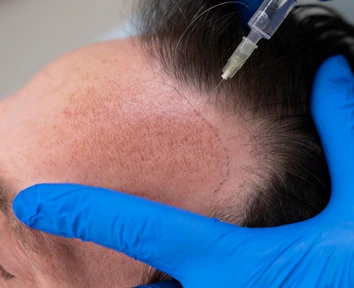
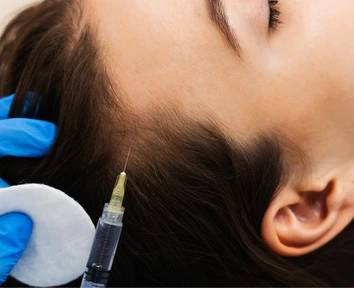
PRP is a non-surgical treatment that uses a preparation obtained from the patient's own blood and administers it to selected scalp areas.
Hair Transplant
Hair transplantation is a surgical hair-restoration procedure that involves relocating hair follicles from a donor area to another area requiring restoration.
PRP does not replace a hair transplant.
The appropriate approach depends on the extent and nature of the individual's hair loss.
Can PRP Be Combined With Other Hair Treatments?
In selected situations, PRP may form part of a broader hair-loss management plan.
However, combining treatments should be based on professional assessment.
More treatments do not automatically mean better results.
The objective should be to develop a treatment plan appropriate for the individual's condition rather than combining procedures unnecessarily.
Is PRP a Surgical Procedure?
No.
PRP is a non-surgical, autologous treatment.
It does not involve surgically removing hair follicles from one part of the scalp and implanting them elsewhere.
Instead, a blood-derived platelet-rich preparation is administered to selected scalp areas.
Who Should Discuss Their Hair Loss Before Choosing PRP?
Professional assessment is particularly important when:
- Hair loss is sudden
- Hair shedding is unusually heavy
- The cause of thinning is unclear
- There are scalp-related concerns
- Hair loss is progressing rapidly
- Previous treatments have not addressed the concern
- Hair loss is significantly advanced
In these situations, identifying the underlying concern can help determine the most appropriate next step.
What Are Realistic Expectations From PRP?
A responsible PRP treatment plan should recognize that:
- Results vary between individuals.
- Hair growth is gradual.
- PRP is not an instant hair-growth procedure.
- PRP is not a guaranteed cure.
- Not every patient responds in the same way.
- The underlying cause of hair loss matters.
- Progressive hair loss may require ongoing management.
- Other treatment options may be appropriate in some cases.
Understanding these limitations is an important part of making an informed treatment decision.
PRP Hair Treatment in Pallavaram
If you are searching for PRP Hair Treatment in Pallavaram, it is important to understand your individual hair-loss pattern before selecting a treatment.
At Safa Elite Care, PRP can be discussed as a potential option for selected hair-thinning concerns following individual assessment.
The focus should be on understanding your concern, discussing suitable options and establishing realistic expectations.
PRP Treatment in Cantonment Pallavaram
People searching for PRP Treatment in Cantonment Pallavaram can discuss their hair concerns during a professional consultation.
Important questions may include:
- What type of hair loss am I experiencing?
- What could be contributing to my hair thinning?
- Is PRP appropriate for my condition?
- How does PRP differ from PRF?
- How does PRP differ from GFC?
- What treatment schedule may be appropriate?
- What results can realistically be expected?
A consultation allows these questions to be considered according to your individual situation.
Key Takeaway
PRP hair treatment involves collecting a sample of the patient's own blood, preparing platelet-rich plasma and administering it to selected scalp areas. It is a non-surgical treatment approach that may be considered for certain hair-loss concerns. The number of sessions, treatment intervals and potential outcomes vary according to the individual and should be determined through professional assessment.
PRP, PRF and GFC are different treatment approaches, and there is no single option that is best for every person.
Meet Dr. Safa Thabassum
Dr. Safa Thabassum, BDS, MPH (UK), with over 8+ years of experience, is associated with Safa Elite Care and follows a personalized approach to patient care.
For hair-loss concerns, understanding the individual's condition is an important part of treatment planning. Hair thinning can have different causes, patterns and stages, so the same treatment may not be suitable for everyone.
During a PRP consultation, you can discuss your hair concerns, previous treatments and expectations and understand whether PRP may be an appropriate option for you.
Why Choose Safa Elite Care for PRP Hair Treatment?
Choosing a hair treatment should begin with understanding your specific concern rather than selecting a procedure based only on online claims.
At Safa Elite Care, the PRP treatment approach focuses on:
Individualized Consultation
Your concerns, hair-loss history, previous treatments and expectations can be discussed before treatment planning.
Hair and Scalp Assessment
Understanding the pattern and extent of thinning can help determine whether PRP may be appropriate.
Clear Explanation of Treatment
The PRP preparation process, scalp administration, expected course and aftercare can be explained before you proceed.
Realistic Expectations
PRP does not provide identical results for every patient. Understanding its potential and limitations is an important part of responsible treatment planning.
Patient-Focused Care
The objective is to understand your individual requirements and discuss appropriate options rather than presenting PRP as a universal solution for hair loss.
PRP Hair Treatment in Pallavaram
If you are searching for PRP Hair Treatment in Pallavaram, the first step should be understanding the reason behind your hair thinning.
PRP may be considered for selected hair-loss concerns, but the appropriate treatment depends on factors such as the type of hair loss, existing hair density, scalp condition and treatment goals.
At Safa Elite Care, you can discuss concerns including:
- Gradual hair thinning
- Increased hair shedding
- Reduced hair density
- Pattern-related hair loss
- Hairline thinning
- Crown-area thinning
- Reduced hair volume
A professional consultation can help determine whether PRP is appropriate for your situation.
PRP Treatment in Cantonment Pallavaram
For individuals searching for PRP Treatment in Cantonment Pallavaram, understanding the treatment before proceeding can help you make an informed decision.
A consultation can address questions such as:
- What type of hair loss am I experiencing?
- What could be contributing to my hair thinning?
- Could PRP be suitable for my condition?
- How is PRP different from PRF?
- How is PRP different from GFC?
- What can I realistically expect from treatment?
These questions are best answered according to your individual hair and scalp condition.
Who May Consider PRP Hair Treatment?
PRP may be discussed as a treatment option for selected individuals experiencing:
- Gradual hair thinning
- Reduced hair density
- Pattern-related hair loss
- Increased hair shedding
- Early-stage thinning
- Reduced hair volume
- Thinning in specific scalp areas
However, experiencing hair loss does not automatically mean that PRP is the right treatment.
The underlying cause and condition of the hair follicles should be considered.
When Should Hair Loss Be Evaluated Before Treatment?
A professional assessment is especially important when hair loss is:
- Sudden
- Rapidly progressing
- Unexplained
- Associated with scalp concerns
- Significantly different from your usual pattern
- Persistent despite previous treatment
In such situations, understanding the possible reason for hair loss should take priority before choosing a particular procedure.
What Happens During Your PRP Consultation?
Your consultation may include discussion of:
Hair-Loss History
When the thinning or shedding started and how it has changed.
Pattern of Hair Loss
Which areas are affected and whether the thinning is localized or more widespread.
Scalp Condition
Any relevant scalp concerns that may need to be considered.
Previous Treatments
Hair treatments or procedures you may have tried previously.
Treatment Expectations
What you would like to achieve and whether those expectations are realistic.
Treatment Options
Whether PRP is appropriate or whether another approach may need to be considered.
What Results Can You Expect From PRP?
PRP should be approached with realistic expectations.
It is not an instant hair-regrowth procedure.
If treatment is appropriate and an individual responds, changes may develop gradually as the hair-growth cycle progresses.
The outcome can differ depending on:
- Cause of hair loss
- Stage of thinning
- Existing hair density
- Condition of the hair follicles
- Individual biological response
- Treatment protocol
- Overall hair-loss management
No particular amount of hair growth or density improvement should be guaranteed.
Can PRP Restore Completely Lost Hair?
No.
PRP should not be presented as a procedure that can restore all previously lost hair.
Its potential role depends on the condition of the existing follicles and the underlying cause of hair loss.
When hair loss is advanced, other hair-restoration options may need to be discussed.
Can PRP Stop Hair Loss Permanently?
No.
PRP is not a guaranteed permanent solution for every form of hair loss.
Some types of hair loss can continue because the factors responsible for the condition remain active.
For progressive hair-loss conditions, ongoing management may be required.
Can PRP Be Used With Other Hair Treatments?
In selected cases, PRP may form part of a broader hair-loss management plan.
However, combining treatments should be based on individual assessment.
Using several treatments simultaneously does not automatically produce better results.
The treatment plan should be selected according to the patient's condition and goals.
PRP Hair Treatment: What Should You Keep in Mind?
Before choosing PRP, remember:
- Hair loss can have multiple causes.
- PRP is not suitable for every type of hair loss.
- Results vary between individuals.
- Hair growth is gradual.
- PRP is not a guaranteed cure.
- Advanced hair loss may require different treatment options.
- Treatment schedules can vary.
- Follow-up may be important for assessing progress.
A professional consultation can help you understand where PRP fits into your overall hair-loss management plan.
Quick Answers About PRP Hair Treatment
What is PRP hair treatment?
PRP hair treatment uses Platelet-Rich Plasma prepared from the patient's own blood and administered to selected areas of the scalp.
What does PRP stand for?
PRP stands for Platelet-Rich Plasma.
Does PRP use my own blood?
Yes. PRP is prepared from a blood sample obtained from the person receiving the treatment.
Is PRP a surgical treatment?
No. PRP is a non-surgical, autologous treatment approach.
Can PRP help with hair growth?
PRP may support hair-related outcomes in selected patients, but individual responses vary and results cannot be guaranteed.
Can PRP increase hair density?
PRP has been investigated for its potential to support hair-density-related outcomes in selected cases. The response differs between individuals.
Is PRP suitable for men?
PRP may be considered for selected male hair-loss concerns following appropriate assessment.
Is PRP suitable for women?
It may be considered for selected female hair-thinning concerns after individual evaluation.
How many PRP sessions are required?
There is no single session schedule for everyone. The treatment plan depends on the individual's condition and clinical assessment.
How soon can PRP results appear?
Hair changes are gradual, and the timeline can vary according to the individual and the underlying hair-loss condition.
Is PRP a permanent hair-loss solution?
No. PRP should not be described as a permanent cure for every type of hair loss.
Is PRP the same as PRF?
No. Both are blood-derived treatments, but their preparation methods and characteristics are different.
Is PRP the same as GFC?
No. PRP and GFC are different blood-derived treatment approaches.
Can PRP replace a hair transplant?
No. PRP and hair transplantation work through fundamentally different treatment approaches.
Where can I get PRP hair treatment in Pallavaram?
If you are looking for PRP Hair Treatment in Pallavaram or PRP Treatment in Cantonment Pallavaram, you can contact Safa Elite Care to discuss your hair-loss concerns and arrange a consultation.
Why a Professional PRP Consultation Matters
An online search for PRP hair treatment near me can help you understand available treatment options, but it cannot determine the cause of your individual hair loss.
A professional consultation can help you understand:
Hair-loss pattern → Possible contributing factors → PRP suitability → Treatment options → Realistic expectations
This allows treatment decisions to be based on your individual requirements.
Book a PRP Hair Treatment Consultation in Pallavaram
If you are experiencing hair thinning, increased shedding or reduced hair density and are considering PRP Hair Treatment in Pallavaram, Safa Elite Care can help you understand your options.
You can discuss your concerns with Dr. Safa Thabassum, BDS, MPH (UK), with over 8+ years of experience, and understand whether PRP may be appropriate for your individual situation.
Contact Safa Elite Care
Phone: 095666 77046
Clinic Address:
No.12, G-2, Ponniamman Koil Street, Cantonment Pallavaram, Chennai, India – 600043
Take the First Step Towards Understanding Your Hair Loss
Hair thinning can have different causes, and choosing a treatment begins with understanding the individual condition.
If you are considering PRP Hair Treatment in Pallavaram, contact Safa Elite Care to discuss your concerns, understand the treatment process and determine whether PRP may be suitable for you.
Call 095666 77046 to enquire about a PRP hair treatment consultation.
faqs
Frequently Asked Questions About PRP Hair Treatment
PRP hair treatment uses Platelet-Rich Plasma prepared from the patient's own blood and administered to selected areas of the scalp.
Yes. PRP is prepared from a blood sample obtained from the person receiving the treatment.
PRP may support hair-related outcomes in selected patients, but individual responses vary and results cannot be guaranteed.
There is no single session schedule for everyone. The treatment plan depends on the individual's condition and clinical assessment.
No. PRP should not be described as a permanent cure for every type of hair loss.

